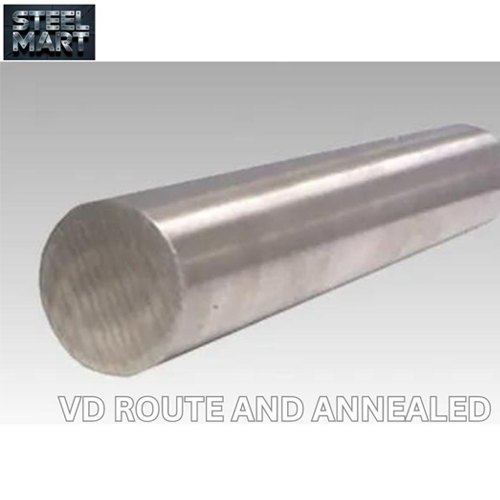
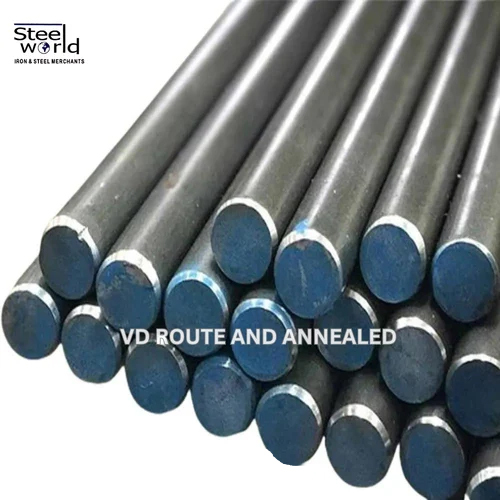
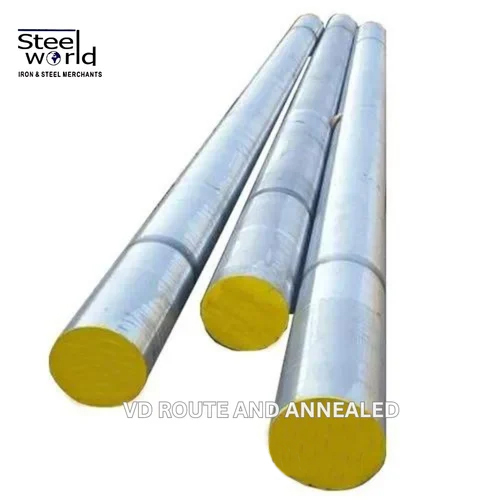
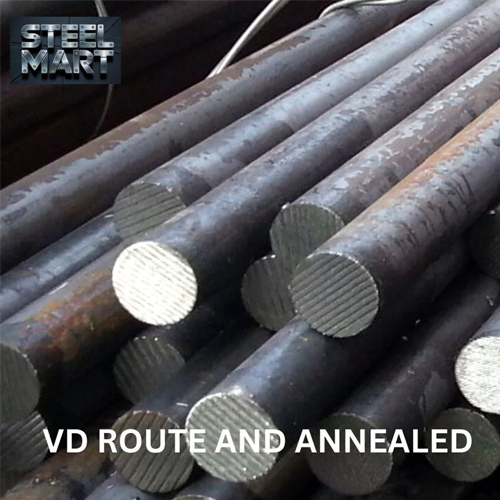
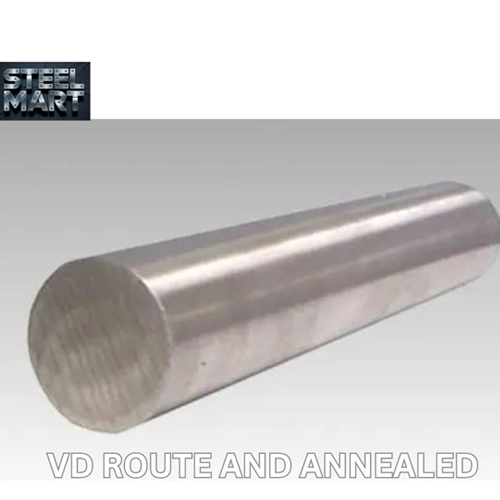
About EN24 VD Route And Annealed Forged Shaft
EN24 steel, also known as 817M40 or AISI 4340, is a high-quality alloy steel known for its excellent tensile strength, ductility, and wear resistance. It is widely used in applications requiring high loading and impact resistance, such as gears, shafts, and spindles.
Key Features of EN24 Steel:
- Composition: EN24 steel typically contains 0.35-0.45% carbon, 0.50-0.80% manganese, 1.30-1.80% nickel, 0.90-1.40% chromium, 0.20-0.35% molybdenum, and small amounts of silicon, sulfur, and phosphorus1.
- Mechanical Properties: It offers good tensile strength, typically around 850-1000 N/mm, and a yield strength of about 650-850 N/mm1.
- Heat Treatment: EN24 can be heat treated to improve its mechanical properties. It is often supplied in the normalized or annealed condition to enhance its machinability and toughness2.
VD Route:The Vacuum Degassing (VD) route is a steelmaking process that removes dissolved gases like hydrogen and nitrogen from the molten steel. This process improves the steels quality by reducing the risk of defects and enhancing its mechanical properties1.
Annealed Round Bars:Annealed round bars of EN24 steel are heat-treated to relieve internal stresses and improve machinability. The annealing process involves heating the steel to a specific temperature (typically between 680-700C) and then slowly cooling it. This results in a softer and more ductile material, making it easier to machine and form3.
Applications:EN24 steel round bars are widely used in the manufacturing of:
- Gears
- Shafts
- Spindles
- Bolts
- Automotive components
- General engineering components
Exceptional Machinability for PrecisionEN24 VD Route Annealed Forged Shafts deliver superb machinability, making them the preferred choice for precision engineering tasks. This trait enables efficient shaping, cutting, and finishing, supporting complex customization without compromising the material's integrity. Engineers and manufacturers benefit from reduced tooling wear and faster production cycles.
Reliable Performance Across Engineering ApplicationsWith high impact strength and advanced ultrasonic testing, these shafts guarantee stability even under demanding operational conditions. Their refined grain microstructure enhances durability and ensures consistent quality, supporting long-term use in machinery and engineering setups throughout India.
FAQ's of EN24 VD Route And Annealed Forged Shaft:
Q: How is the EN24 VD Route Annealed Forged Shaft processed for engineering use?
A: This shaft undergoes forging followed by annealing to achieve a refined grain microstructure, enhancing its machinability and mechanical properties. Additionally, it is ultrasonically tested to detect internal flaws and ensure reliable performance for demanding engineering applications.
Q: What benefits do users gain from the shaft's excellent machinability?
A: Excellent machinability allows users to easily perform threading, cutting, and shaping tasks, reducing manufacturing time and tool wear. This ensures precise tolerance achievement, cost-effective operations, and high-quality finished products.
Q: When can orders for EN24 VD Route and Annealed Forged Shaft be fulfilled?
A: Orders are processed with a short lead time, enabling prompt delivery. Minimum order quantities are negotiable, making procurement flexible for bulk buyers and smaller businesses alike.
Q: Where is this forged shaft typically used?
A: It finds application in engineering and machinery industries-such as manufacturing tool components, transmission shafts, and rotating parts-leveraging its sturdy build and excellent impact strength throughout various sectors across India.
Q: What is the process behind the ultrasonic testing of these shafts?
A: Ultrasonic testing utilizes high-frequency sound waves to identify and evaluate any internal discontinuities. This process guarantees that every shaft meets rigorous quality standards before delivery.
Q: How does the high impact strength benefit machinery operations?
A: High impact strength ensures the shaft withstands dynamic and heavy-load conditions without deforming or failing, providing reliable and long-lasting performance in critical machinery applications.






 Send Inquiry


 Send Inquiry
 Send Inquiry