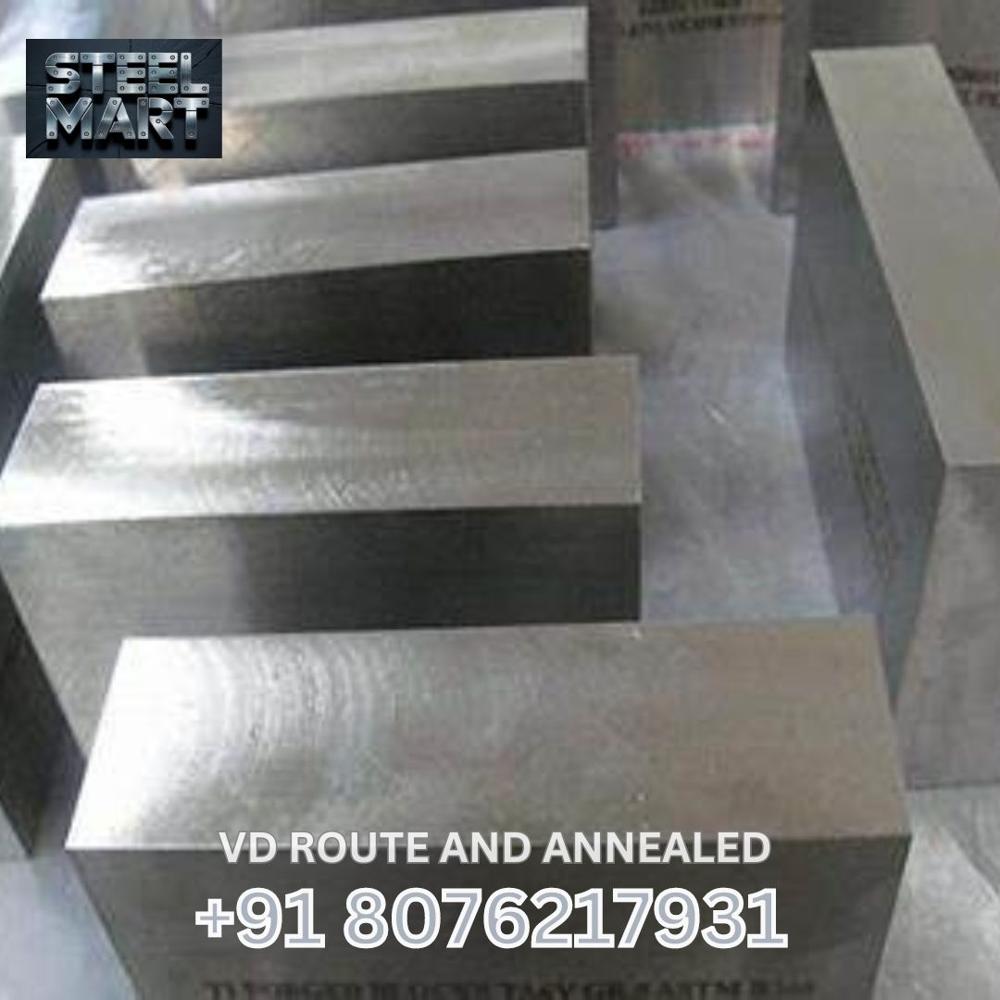
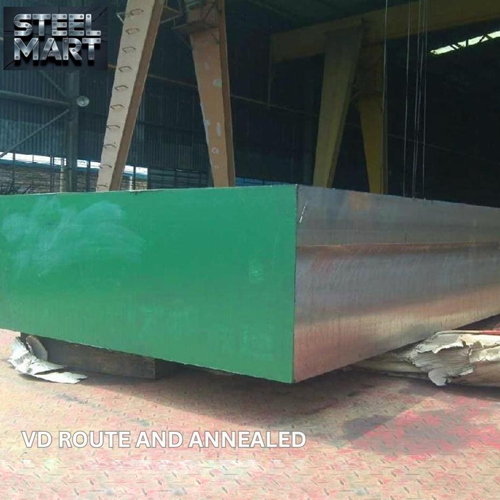
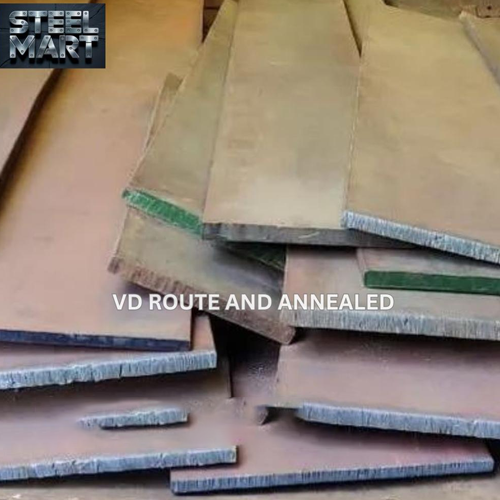
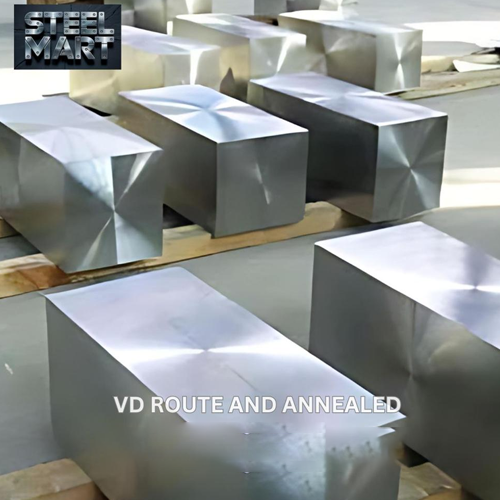
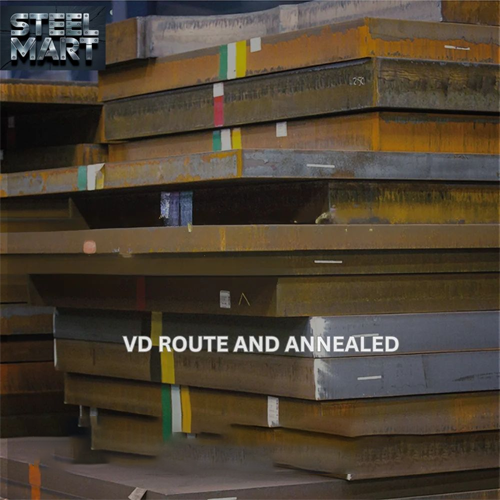
About En9 VD Route And Annealed Heavy Duty Forged Block
EN9 steel, also known by its trade name 070M55, is a medium carbon steel known for its good tensile strength and wear resistance. It is commonly used in applications requiring higher strength and durability, such as shafts, gears, and bolts.
Key Features of EN9 Steel:
- Composition: EN9 steel typically contains 0.50-0.60% carbon, 0.50-0.80% manganese, and small amounts of silicon, sulfur, and phosphorus1.
- Mechanical Properties: It offers good tensile strength, typically around 500-800 N/mm, and a yield strength of about 300-500 N/mm1.
- Heat Treatment: EN9 can be heat treated to improve its mechanical properties. It is often supplied in the normalized or annealed condition to enhance its machinability and toughness2.
VD Route:The Vacuum Degassing (VD) route is a steelmaking process that removes dissolved gases like hydrogen and nitrogen from the molten steel. This process improves the steels quality by reducing the risk of defects and enhancing its mechanical properties3.
Annealed Round Bars:Annealed round bars of EN9 steel are heat-treated to relieve internal stresses and improve machinability. The annealing process involves heating the steel to a specific temperature and then slowly cooling it. This results in a softer and more ductile material, making it easier to machine and form2.
Applications:EN9 steel round bars are widely used in the manufacturing of:
- Shafts
- Gears
- Bolts
- Studs
- Automotive components
- General engineering components
Vacuum Degassed Forging for Maximum PurityUtilizing an advanced vacuum degassed forging process, the En9 heavy duty forged block achieves superior purity by significantly reducing inclusions. This manufacturing approach ensures highly reliable performance and consistency, providing users with a defect-minimized product tailored for critical industrial applications.
Precision Annealing for Long Service LifeOur forged block undergoes a meticulous annealing and stress relief process, resulting in a homogeneous grain structure and enhanced impact toughness. This not only boosts its operational reliability but also contributes to an extended service life, minimizing maintenance intervals even during intense usage.
FAQ's of En9 VD Route And Annealed Heavy Duty Forged Block:
Q: How is the En9 VD Route Forged Block manufactured to ensure high quality?
A: This forged block is produced through a hot forging process followed by vacuum degassing and annealing. The vacuum degassing eliminates unwanted inclusions, resulting in a homogeneous grain structure and enhanced toughness. Precision cutting ensures consistent edge quality for industrial needs.
Q: What advantages does the vacuum degassed route provide in this forged block?
A: Vacuum degassing removes impurities and minimizes inclusions, leading to greater material integrity. This process enhances impact toughness, reliability, and extends the service life of the forged block, making it ideal for applications requiring robust and durable materials.
Q: When should the En9 VD Route Forged Block be used?
A: This forged block is perfect for heavy machining and demanding industrial tasks where long-lasting performance, machinability, and strength are required. Its precision-cut edges and stress relieved structure render it suitable for environments with high operational load.
Q: Where can I purchase the En9 Annealed Heavy Duty Forged Block in India?
A: You can acquire this forged block from a wide network of dealers, exporters, importers, manufacturers, suppliers, wholesalers, and retailers throughout India. Always consult authorized distributors to ensure product authenticity and support.
Q: What is the typical annealing process used for this forged block?
A: The annealing process involves controlled heating followed by gradual cooling, which stress relieves the material and refines the grain structure. This results in improved machinability, enhanced toughness, and a stable, defect-free final product.
Q: How does the product's microstructure benefit its performance?
A: A homogeneous grain structure achieved through precise processing ensures consistent mechanical properties, better resistance to fatigue and wear, and improved machinability, directly contributing to the reliability and longevity of the forged block.






 Send Inquiry


 Send Inquiry
 Send Inquiry